Commercial Roofing Services
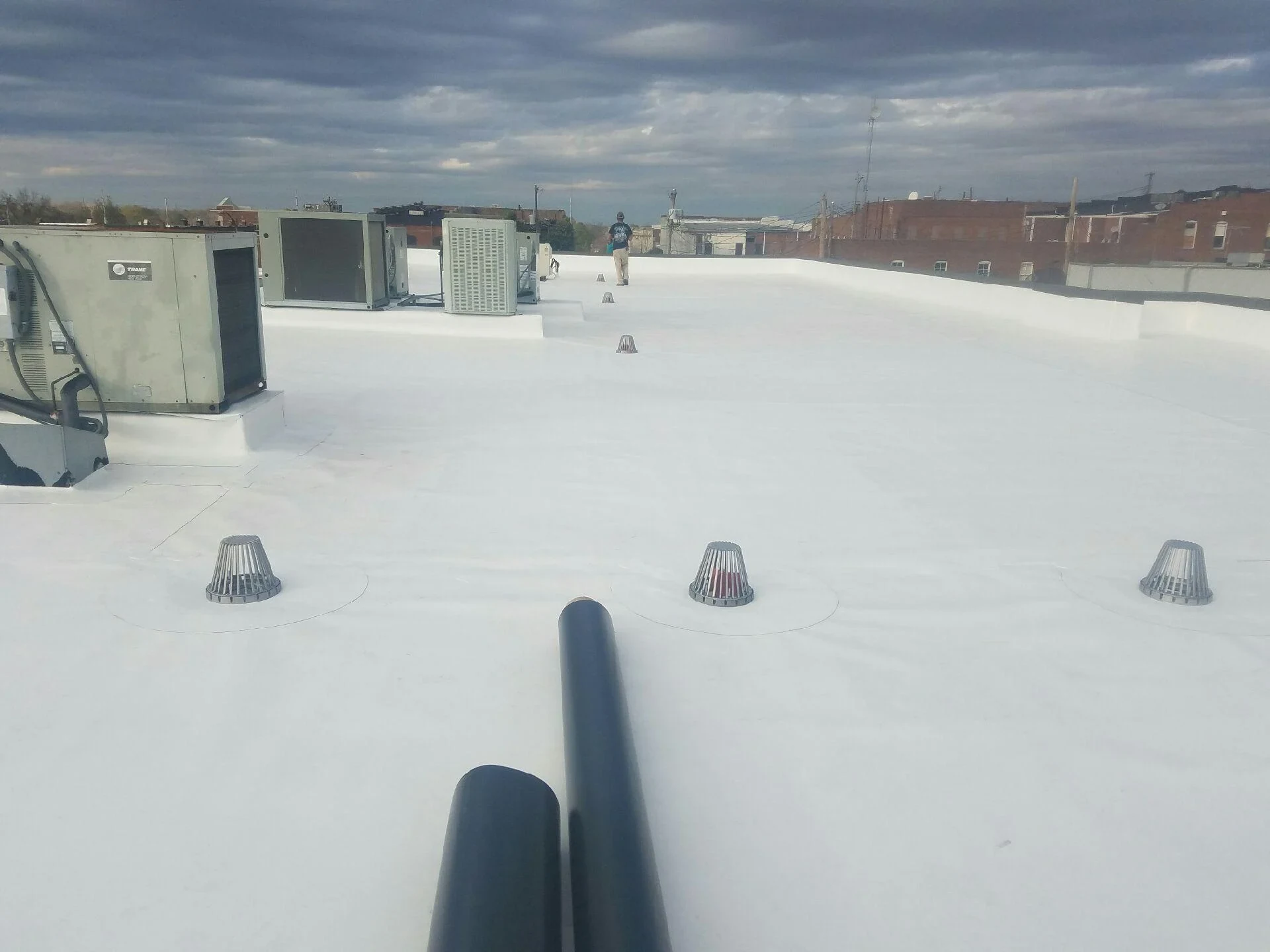
PVC Roofing in Spartanburg, SC
PVC Membrane for Roofs With Chemical or Grease Exhaust Exposure
PVC is the membrane we reach for when a roof deals with something most low-slope roofs never see: oil, grease, or chemical exhaust venting from rooftop equipment. Tire and rubber manufacturing exhaust, kitchen grease from restaurant tenants along the Westgate retail corridor, and solvent-heavy processes at some of the smaller manufacturers scattered through the county all degrade a standard TPO membrane over time in ways PVC resists.
Chemical Resistance and Where It Matters
The plasticizer chemistry in PVC gives it resistance to fats, oils, and a range of industrial chemicals that will attack other single-ply membranes. On a manufacturing building tied into the tire and automotive supply chain around Greer and Duncan, that resistance can be the deciding factor between a roof that lasts and one that needs premature replacement because exhaust residue broke down the membrane surface.
We ask about rooftop exhaust sources during the site visit specifically because this detail changes the membrane recommendation. A building owner who does not flag a fryer exhaust vent or a solvent-heavy process line can end up with a membrane that fails years ahead of schedule.
Heat-Welded Seams
PVC seams weld with hot air, similar to TPO, and produce a strong, monolithic seam when done correctly. Weld temperature, overlap width, and probe testing all factor into seam quality, and we verify each during installation rather than relying on a post-installation walk-through alone. PVC's chemical composition also means seam welds can sometimes be re-welded years later during a repair, which is an advantage on roofs that need targeted maintenance rather than full replacement. We keep records of the original weld pattern and membrane batch for each installation, which makes a future re-weld or targeted repair faster since the crew is not guessing at how the original seams were laid out.
Fire Rating and Code Considerations
PVC membrane assemblies commonly achieve Class A fire ratings and various UL listings depending on the deck type and insulation package underneath, which matters on manufacturing occupancies where fire classification is part of the permitting and insurance underwriting process. We build the fire-rated assembly to match what the jurisdiction and the owner's insurer require, documented in the submittal package rather than assumed. That documentation typically includes the deck type, insulation layer, and membrane specification together as a tested assembly, since fire rating is a property of the full system rather than the membrane alone.
- Rooftop exhaust and process-vent survey before membrane selection
- Chemical exposure assessment for adjacent equipment or intake locations
- Fire classification confirmation against code and insurance requirements
- Heat-welded seam installation with in-progress probe testing
- Flashing details rated for the same chemical exposure as the field membrane
- Manufacturer warranty registration matched to the confirmed exposure conditions
Reflectivity and Membrane Thickness
Like TPO, PVC is available in reflective white and other light colors, which helps manage rooftop heat gain through the Upstate's humid summer months. We typically quote 50 or 60 mil membrane on industrial buildings with chemical exposure, since thinner membrane offers less of a service-life margin when the surface is being chemically attacked in addition to normal weathering.
Cost Compared to TPO
PVC generally costs more per square than TPO, and we say that plainly during the bid conversation rather than letting an owner discover it later. The added cost is worth it on roofs with genuine chemical or grease exposure. On a standard warehouse roof with no unusual exhaust conditions, TPO is often the more economical choice for equivalent performance, and we will say so even when PVC would still work. Owners sometimes assume the more expensive membrane is automatically the better long-term value, and on a roof without real chemical exposure, that assumption costs money without buying any added protection.
Documentation for Insurance and Code Officials
Manufacturing occupancies with chemical or process exposure often face closer scrutiny during permitting and insurance underwriting than a standard warehouse. We prepare a documentation package covering the specified membrane, its chemical resistance data, the fire classification for the full assembly, and the wind uplift calculation, so the owner has everything a code official or underwriter is likely to ask for without a separate request cycle after the job is complete.
Where a facility's process changes over time, such as adding new equipment with different exhaust characteristics, we recommend a reassessment of the roof's chemical exposure rather than assuming the original PVC specification still covers whatever is now venting across the membrane.
Frequently Raised Questions
How do I know if my building needs PVC instead of TPO?
The main trigger is rooftop exposure to grease, oil, or chemical exhaust. We evaluate your specific exhaust and process equipment during the site visit before recommending one membrane over the other.
Can PVC seams be repaired years after installation?
Yes, PVC's weldability generally holds up over time, which allows targeted seam repair or re-welding rather than requiring full membrane replacement for isolated seam issues.
What fire rating does a PVC roof assembly typically carry?
Ratings depend on the full assembly, including deck and insulation, but Class A and relevant UL listings are commonly achievable and documented in our submittal package.
Does PVC cost significantly more than TPO?
Generally yes, by a meaningful margin per square. We quote both where relevant so owners can weigh the added chemical resistance against the cost difference.
Will you flag if PVC isn't necessary for my building?
Yes. If your roof has no unusual exhaust or chemical exposure, we will tell you TPO is likely the better value rather than upselling a membrane you don't need.
Ready to review the roof scope?
Request a Roof AssessmentCoverage: Spartanburg and Upstate South Carolina
Building types: Manufacturing, logistics, retail, and institutional
Service: Assessment, repair, replacement, maintenance, and coatings
Systems: TPO, PVC, EPDM, metal, modified bitumen, and coatings
Documentation: Scope, warranty, and closeout records
Response: Spartanburg County and nearby Upstate communities