Roof Systems
SBS Modified Bitumen Roofing in Spartanburg, SC
SBS Modified Bitumen for Multi-Ply Roof Assemblies
Styrene-butadiene-styrene, or SBS, modified bitumen is the multi-ply system we specify on Spartanburg County buildings where owners want the redundancy of layered roofing rather than a single-ply membrane, or where an existing built-up or modified bitumen roof is being recovered in kind. SBS chemistry gives the asphalt-based membrane rubber-like flexibility that older straight asphalt roofing didn't have.
SBS Chemistry vs. APP Modified Bitumen
SBS-modified bitumen is distinct from APP (atactic polypropylene) modified bitumen, the other common modified asphalt category, primarily in how each responds to temperature. SBS membranes retain flexibility at lower temperatures and are typically installed with cold adhesive or hot asphalt rather than torch-applied, while APP membranes are usually torch-welded and perform differently under thermal cycling. We confirm which chemistry a given manufacturer's product uses before specifying, since the two require different installation methods and aren't interchangeable within the same assembly.
Installation Methods: Torch, Cold-Applied, and Self-Adhered
SBS modified bitumen ply sheets can be installed by torch application, hot asphalt mopping, cold adhesive, or self-adhered systems depending on the specific product and job conditions. Torch application requires strict fire-safety protocol on occupied buildings, particularly near parapets, curbs, and other combustible transition points, and we follow manufacturer-specified torch safety procedures including a fire watch period after work concludes. On buildings where torch work isn't appropriate due to occupancy or insurance requirements, cold-applied or self-adhered SBS systems avoid open flame entirely.
Base Ply and Cap Sheet Layering
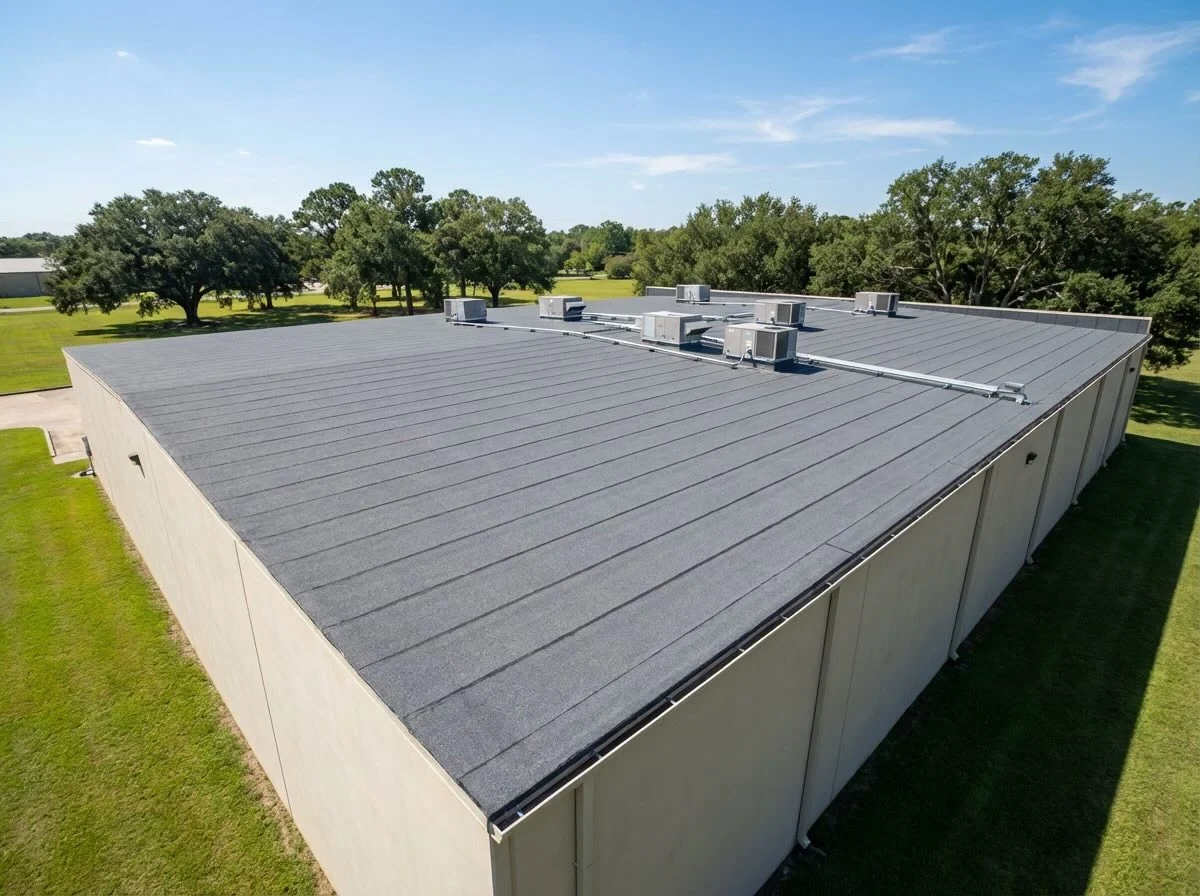
A typical SBS assembly uses a base ply layer for waterproofing redundancy and a cap sheet as the exposed weathering surface, with granule-surfaced cap sheets being the most common finish on commercial low-slope roofs. Cap sheet granule color affects reflectivity, and manufacturers offer both standard dark granule and reflective white or light-colored cap sheet options. We discuss granule color with owners the same way we discuss membrane color on single-ply systems, since it carries similar cooling-load implications on large exposed roof areas.
FM and UL Ratings for Modified Bitumen Assemblies
Modified bitumen assemblies carry their own FM 4470 wind uplift and UL 790 fire classification listings, tested for the specific ply configuration, attachment method, and insulation package. Fire classification is particularly relevant for torch-applied systems, where the assembly rating accounts for the installation method itself in addition to the finished membrane. We match the tested assembly exactly rather than substituting a different insulation type mid-project, which is a common way modified bitumen assemblies lose their rated status. Deck type factors into that rating too, and a plan drawn up for a steel deck doesn't automatically transfer to a concrete or wood deck without reconfirming the assembly number against the actual substrate.
- Confirm whether the specified product is SBS or APP chemistry before selecting installation method
- Follow manufacturer torch safety protocol and fire watch requirements on torch-applied jobs
- Select granule cap sheet color based on cooling load and reflectivity goals
- Match base ply and cap sheet combination to the manufacturer's tested assembly
- Verify FM and UL assembly rating against actual insulation and attachment configuration
- Inspect flashing laps and seam overlaps annually, since modified bitumen failures often start at transitions
Where SBS Fits on Spartanburg's Older Building Stock
Spartanburg County has a meaningful inventory of older mill buildings and legacy industrial structures around Arcadia, Saxon, and Glendale that were originally roofed with built-up asphalt systems and have since been converted or recovered with modified bitumen over the decades. When we inspect these buildings for reroofing, matching the new assembly's compatibility with existing substrate and any prior recover layers is a bigger factor than it typically is on a newer single-ply building, since multiple historical roofing layers can affect insulation, drainage, and structural load.
Thermal Cycling and Humidity Performance
SBS's rubberized flexibility handles Spartanburg's wide seasonal and daily temperature swings well, remaining pliable through winter cold snaps and summer heat without the brittleness that affected older straight-asphalt roofing. Humidity and moisture management still matter at every seam and flashing lap, since trapped moisture beneath a multi-ply system is harder to detect early than moisture beneath a single-ply membrane, making periodic moisture surveys a more important part of maintenance on modified bitumen roofs. We recommend infrared or core-cut moisture scans on any modified bitumen roof over ten years old before signing off on a routine repair, since a leak reported at one location often traces back to trapped moisture migrating from a different part of the roof entirely.
Common Questions on SBS Modified Bitumen
Is torch-applied SBS safe on an occupied building?
It can be, when manufacturer fire safety protocol and a documented fire watch period are followed correctly. Cold-applied or self-adhered alternatives are available where torch work isn't appropriate for the building or its insurance requirements.
How many plies does a typical SBS roof need?
Configuration varies by manufacturer system and project, ranging from a single base-and-cap combination to multiple ply layers depending on the required warranty tier and existing roof conditions.
Can modified bitumen be installed over an existing built-up roof?
Sometimes, if the existing roof passes a moisture survey and structural assessment, though full tear-off is common on older Spartanburg County buildings with multiple historical roof layers already in place.
Does granule color affect warranty terms?
Not typically on its own, though reflective cap sheets may factor into energy code compliance on certain projects depending on the applicable code cycle.
How does SBS compare to single-ply membranes on cost?
Multi-ply SBS systems often involve more labor-intensive installation than single-ply membranes, which affects total installed cost. We provide side-by-side pricing when both options are realistic for a given building.
Ready to review the roof scope?
Request a Roof AssessmentCoverage: Spartanburg and Upstate South Carolina
Building types: Manufacturing, logistics, retail, and institutional
Service: Assessment, repair, replacement, maintenance, and coatings
Systems: TPO, PVC, EPDM, metal, modified bitumen, and coatings
Documentation: Scope, warranty, and closeout records
Response: Spartanburg County and nearby Upstate communities