Roof Systems
Silicone Roof Coating Systems in Spartanburg, SC
Silicone Coating Systems for Ponding-Water and Aging Roofs
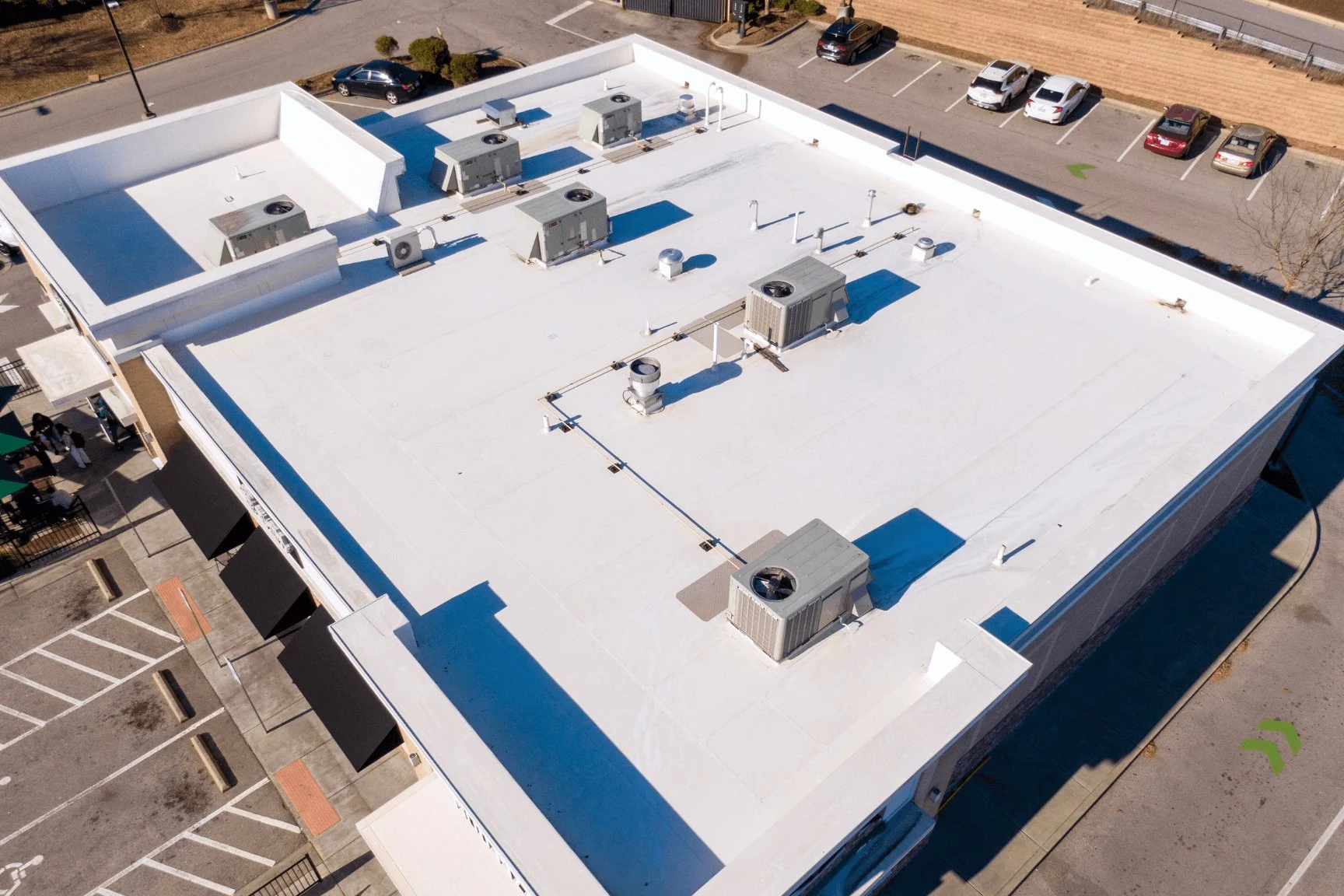
Silicone roof coating gives owners of aging Spartanburg County buildings a path to extend roof service life without full tear-off and replacement, provided the existing substrate qualifies. It's a restoration approach, not a like-for-like membrane replacement, and it comes with its own spec requirements, moisture testing steps, and warranty structure that differ meaningfully from new roof installation.
What Qualifies a Roof for Silicone Coating
Before recommending a coating system, we run a moisture survey across the existing roof, typically using infrared scanning or a core-cut moisture check, since a coating applied over wet insulation traps that moisture and accelerates deterioration rather than solving it. Roofs with widespread saturated insulation, extensive membrane splitting, or structural deck issues are generally poor candidates for coating and need tear-off instead. Roofs with isolated wear, minor seam issues, and a sound overall substrate are the better fit.
Why Silicone Over Acrylic for Ponding Water
Silicone coatings resist standing water without the softening or emulsification that acrylic coatings can experience under prolonged ponding, which makes silicone the preferred choice on Spartanburg County roofs with drainage issues that create low spots holding water after storms. Distribution and manufacturing buildings with large flat roof areas near the Tyger River industrial corridor are common candidates, since roof drainage design on older large-footprint buildings doesn't always eliminate ponding even after gutter and drain maintenance.
Coating Thickness and Dry Film Requirements
Manufacturer spec sheets specify coating system performance in terms of dry film thickness (DFT), not wet application rate alone, since solvent or water content in the coating affects how much material remains once cured. We measure and document DFT during application using wet film gauges calibrated to the specific product's cure characteristics, and we keep that documentation as part of the warranty submission package, since under-thickness application is one of the most common reasons coating warranties get denied.
Granule or Aggregate Surfacing for Traffic Areas
On roof areas with regular foot traffic for HVAC service, some silicone systems incorporate a granule or aggregate broadcast into the top coat to improve slip resistance and wear durability at walkways and equipment platforms. We map out expected traffic patterns before application so granule reinforcement goes where it's actually needed rather than uniformly across the whole roof, which adds unnecessary cost. Walkway pad accessories are another option some manufacturers offer as a factory-made alternative to broadcast granule, and we compare both against expected service frequency before deciding which fits a given roof's traffic pattern better.
- Run a moisture survey before recommending coating over tear-off
- Confirm dry film thickness requirements from the manufacturer's current spec sheet
- Measure and log wet film thickness during application against the target DFT
- Add granule or aggregate reinforcement at high-traffic service and walkway areas
- Address existing ponding or drainage issues before or during coating application, not after
- Confirm warranty terms specific to coating systems, which differ from new membrane warranties
Warranty Structure for Coating Systems
Coating manufacturer warranties are generally shorter in term than new membrane warranties, commonly in the 5 to 15 year range depending on coating system, DFT achieved, and substrate condition at application. Warranties typically require the existing roof to pass a pre-application moisture inspection, sometimes performed or verified by the manufacturer's own field representative on larger projects. We schedule that inspection as a required step, not an optional one, on every coating project we bid.
Cost Comparison to Tear-Off and Replacement
Coating systems generally cost significantly less per square than full tear-off and replacement, which is the main reason owners consider them, particularly on buildings where capital budget for a full reroof isn't available in the current cycle. We present coating as a service-life extension strategy with a defined warranty term, not a permanent substitute for eventual replacement, so owners can plan capital budgeting realistically rather than treating a coated roof as a new-roof reset.
Thermal and UV Performance in Upstate Summers
Silicone coatings hold up well under UV exposure and don't chalk or degrade as quickly as some acrylic coatings under Spartanburg's intense summer sun, which is part of why silicone commands a higher material cost than acrylic in most manufacturer catalogs. Reflective white silicone coatings also reduce rooftop surface temperature meaningfully compared to an aged, darkened original membrane, which can help older buildings with limited insulation manage summer cooling load.
Questions About Silicone Roof Coating
Can any roof be coated instead of replaced?
No. Coating only makes sense on a substrate that passes a moisture survey and structural review. We're direct with owners when a roof needs tear-off rather than coating.
How long does a silicone coating system typically last?
Warranty terms commonly range from 5 to 15 years depending on the system and application thickness, though actual performance depends on substrate condition and maintenance.
Does coating stop existing leaks?
Coating can address minor surface wear and seam issues, but active leaks from deteriorated flashing or deck problems need to be repaired before or as part of the coating scope, not covered over.
Will silicone coating eliminate ponding water?
Coating improves the membrane's resistance to standing water damage but doesn't correct underlying drainage design issues. Persistent ponding often needs a tapered insulation or drain modification addressed separately.
Can the roof be recoated again after the first coating warranty expires?
Often yes, provided the substrate is still sound at that point, though each recoat requires its own moisture survey and condition assessment rather than an automatic renewal.
Ready to review the roof scope?
Request a Roof AssessmentCoverage: Spartanburg and Upstate South Carolina
Building types: Manufacturing, logistics, retail, and institutional
Service: Assessment, repair, replacement, maintenance, and coatings
Systems: TPO, PVC, EPDM, metal, modified bitumen, and coatings
Documentation: Scope, warranty, and closeout records
Response: Spartanburg County and nearby Upstate communities