Service Areas
Commercial Roofing Contractors Downtown Spartanburg, SC
Commercial Roofers in Downtown Spartanburg
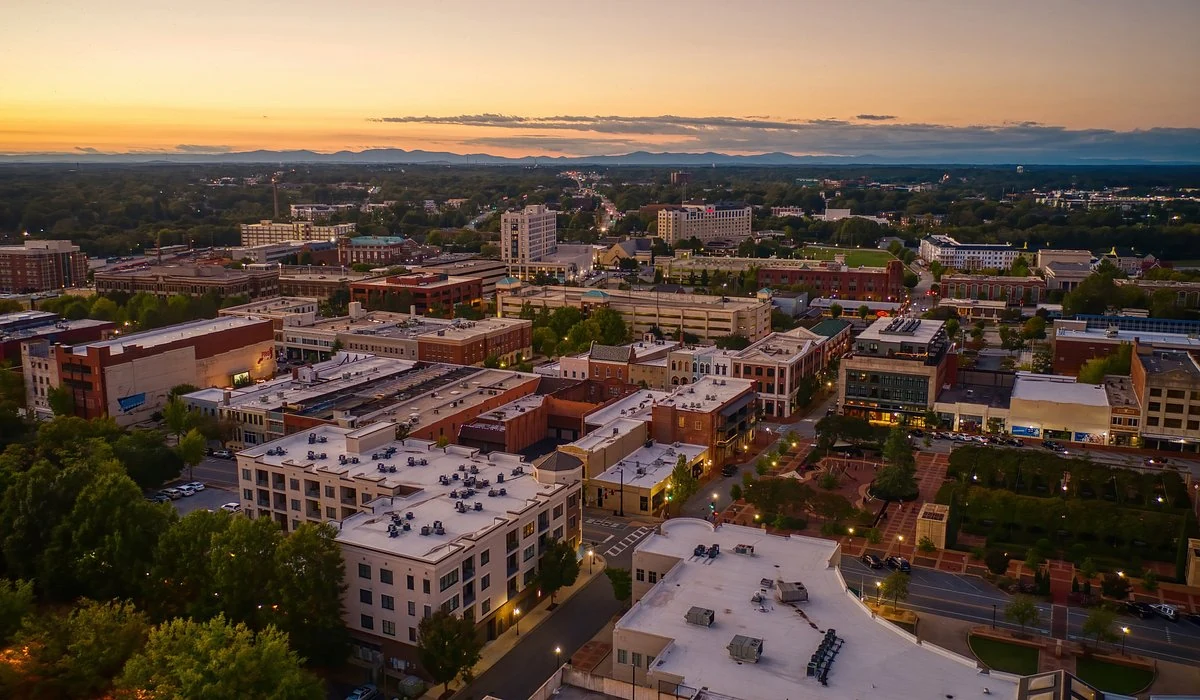
Commercial roofers serving Downtown Spartanburg should document leak sources, wet insulation, drainage, edge details, penetrations, and repair history before recommending a scope. Downtown Spartanburg's roof stock is a different problem than the industrial corridor: older masonry buildings around Morgan Square, hotel roofs that can't disrupt overnight guests, and college-owned buildings that run through their own procurement process. We adjust our approach for each of those conditions rather than treating downtown as a smaller, scaled-down version of the suburban market.
Reroofing Older Masonry Buildings Near Morgan Square
Many of the office and mixed-use buildings around Morgan Square sit on masonry structures decades older than the steel-frame buildings common along I-85, and the roof deck underneath the membrane reflects that age. We check deck condition carefully on these buildings before specifying a system, since older wood or gypsum decking common in this era of construction has different fastening and attachment requirements than the steel decking typical of newer commercial construction.
Parapet walls on these older buildings also tend to need more attention than a modern low parapet, since decades of moisture cycling through aging masonry can compromise the substrate that new coping and counterflashing need to anchor into. We inspect parapet condition as part of any downtown proposal rather than assuming the wall itself is sound.
Hotel Roofing Around Occupied Guest Floors
Downtown's hotel buildings run guests around the clock, which limits when roof work involving noise, vibration, or interior access can happen. We schedule fastening and demolition activity for hours the property identifies as lower-impact, and we coordinate directly with hotel engineering staff on any work requiring roof access adjacent to guest floors or mechanical penthouses.
Odor control matters more here than at an industrial building, since adhesive or torch-applied system odors can travel into a hotel's HVAC intake if it's positioned near the work area. We confirm intake locations before starting any work that could generate detectable odor.
College and University Roof Procurement
Buildings owned by the downtown colleges typically go through the institution's own facilities procurement process, which can include state or institutional bid thresholds, prevailing wage requirements, or a preferred-contractor list depending on the project value and funding source. We confirm which procurement path applies before submitting a proposal, since a project funded through certain institutional channels may require documentation or bid formatting we wouldn't otherwise include.
What Downtown Buildings Need That Suburban Ones Often Don't
- Deck condition assessment on older masonry buildings
- Parapet and coping substrate inspection before flashing replacement
- Low-impact scheduling around occupied hotel guest floors
- HVAC intake location checks before any odor-generating work
- Confirmation of applicable institutional procurement requirements
- Coordination with building engineering staff rather than a single facility manager
Working Within a Historic District Where One Applies
Where a downtown building falls within a locally designated historic district, exterior-visible roof elements like parapet caps, cornices, or dormers may be subject to design review before replacement. We identify whether a building sits within that review boundary early in the proposal process, since a design review requirement can affect project timeline in a way that a standard reroof permit doesn't.
Where a review board requires a specific coping profile or material match to preserve the building's street-level appearance, we source product samples for approval before ordering full quantities, since a rejected sample after materials arrive can stall a project far longer than the extra week spent on approval up front.
Access Constraints on Tightly Built Downtown Lots
Buildings around Morgan Square often sit on narrow lots with little to no staging area at ground level, unlike the open lay-down space typical of an industrial park building. We plan crane placement and material hoisting around limited street access, sometimes coordinating temporary lane closures or loading zone permits with the city before mobilizing, and we factor that additional planning time into the project schedule from the outset.
Questions Owners and Facility Managers Ask
Do older masonry buildings downtown need a different roof deck approach?
Often, yes. Many buildings around Morgan Square have wood or gypsum decking rather than the steel decking common in newer construction, which changes fastening and attachment requirements. We check deck condition before specifying a system rather than assuming it matches suburban construction.
How do you schedule roof work at an occupied downtown hotel?
We coordinate directly with hotel engineering staff and schedule noise- or vibration-generating work for hours the property identifies as lower-impact. We also confirm HVAC intake locations before any work that could generate detectable odor near guest floors or mechanical penthouses.
Does a college-owned building require a different bidding process?
It can. Institutional buildings often go through the college's own facilities procurement process, which may include bid thresholds, prevailing wage requirements, or a preferred-contractor list depending on project value and funding source. We confirm the applicable path before submitting a proposal.
Are historic district rules a factor for downtown roof work?
For buildings within a locally designated historic district, exterior-visible elements like parapet caps or cornices may need design review before replacement. We identify whether that applies early, since review can extend the project timeline well beyond what a standard reroof permit requires.
What condition issues are more common on older parapet walls downtown?
Decades of moisture cycling through aging masonry can compromise the substrate that new coping and counterflashing need to anchor into. We inspect parapet condition on every downtown proposal instead of assuming the wall itself is structurally sound, and we note any substrate repair needed before new flashing installation can proceed on that section of wall.
Ready to review the roof scope?
Request a Roof AssessmentCoverage: Spartanburg and Upstate South Carolina
Building types: Manufacturing, logistics, retail, and institutional
Service: Assessment, repair, replacement, maintenance, and coatings
Systems: TPO, PVC, EPDM, metal, modified bitumen, and coatings
Documentation: Scope, warranty, and closeout records
Response: Spartanburg County and nearby Upstate communities